
 Image 1 of 4
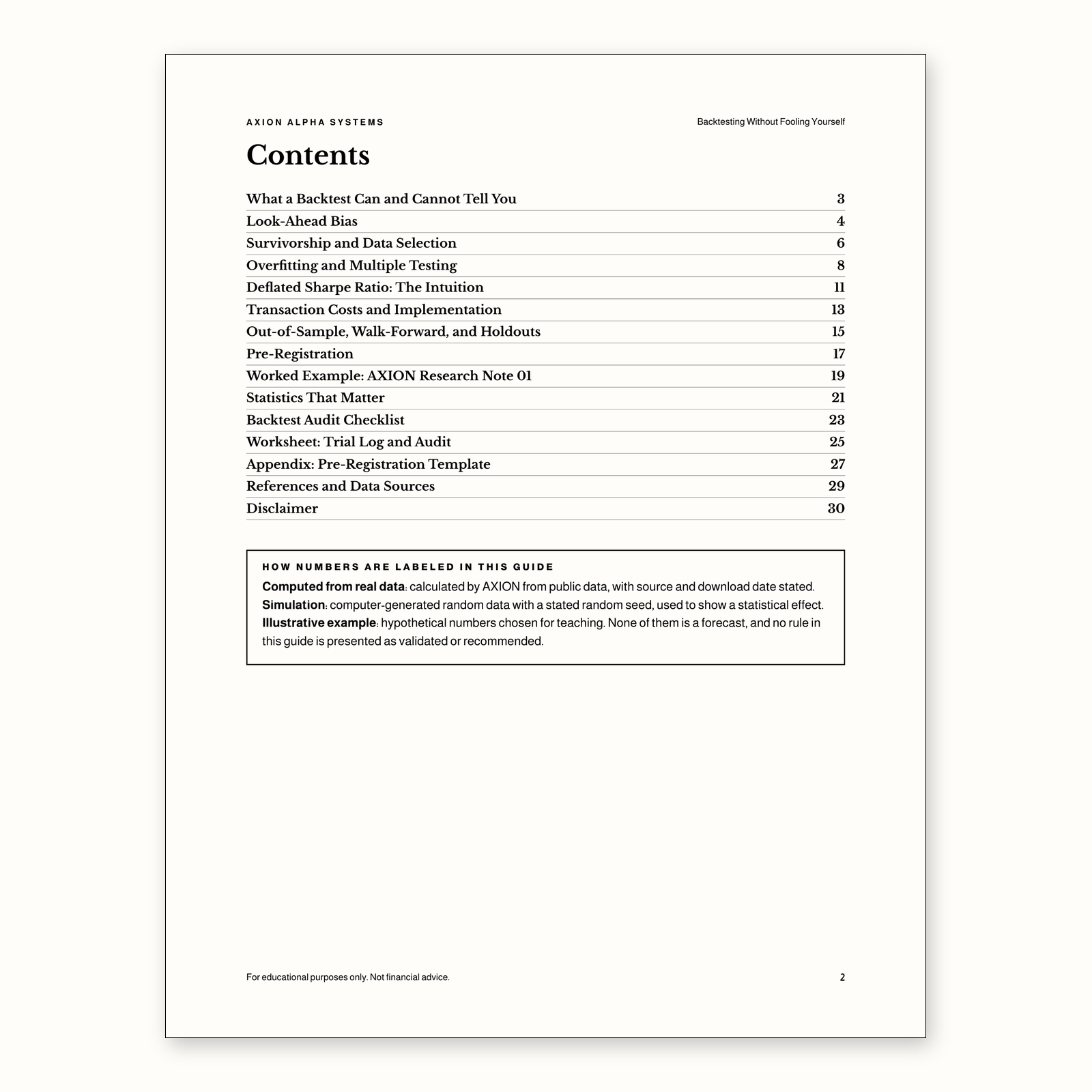 Image 2 of 4
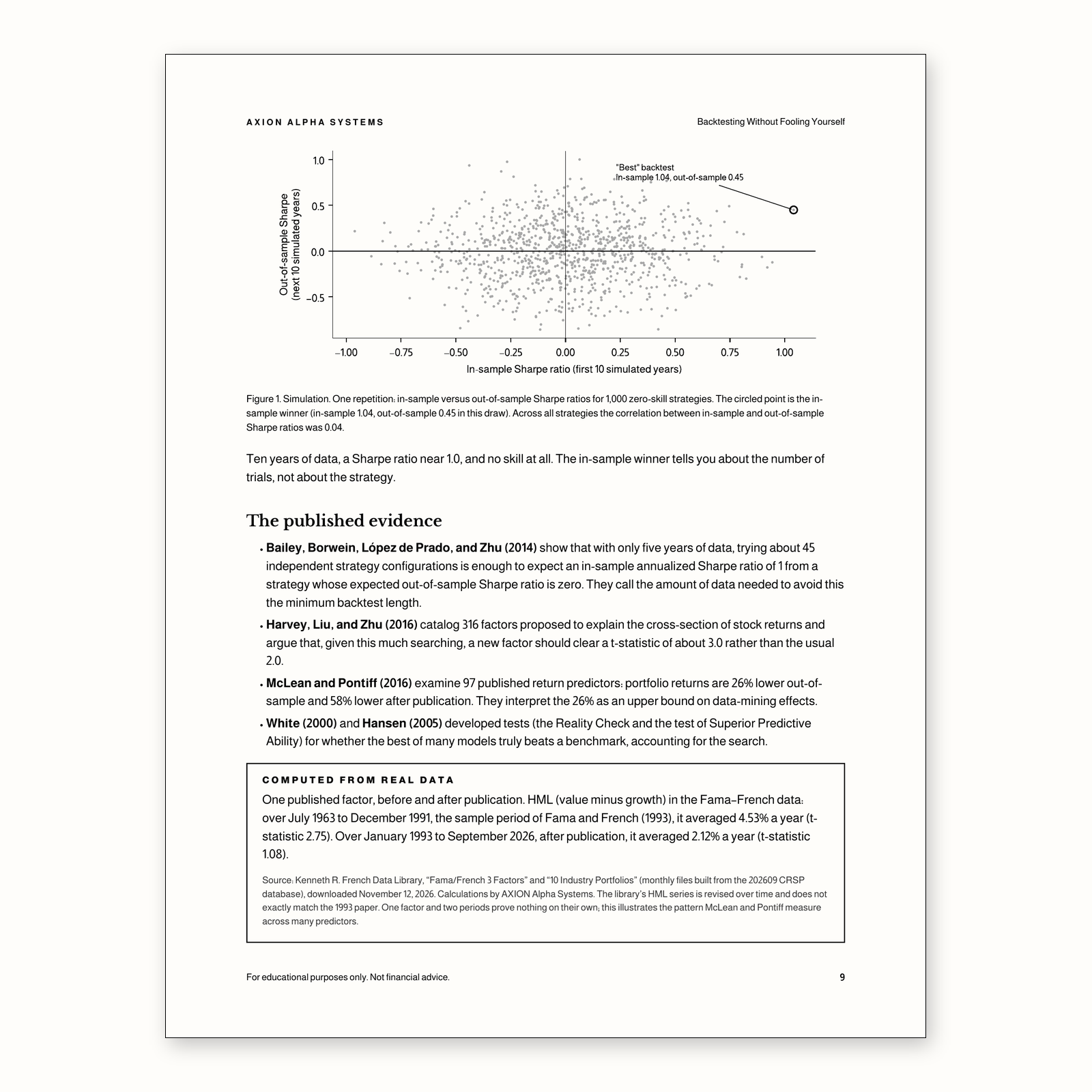 Image 3 of 4
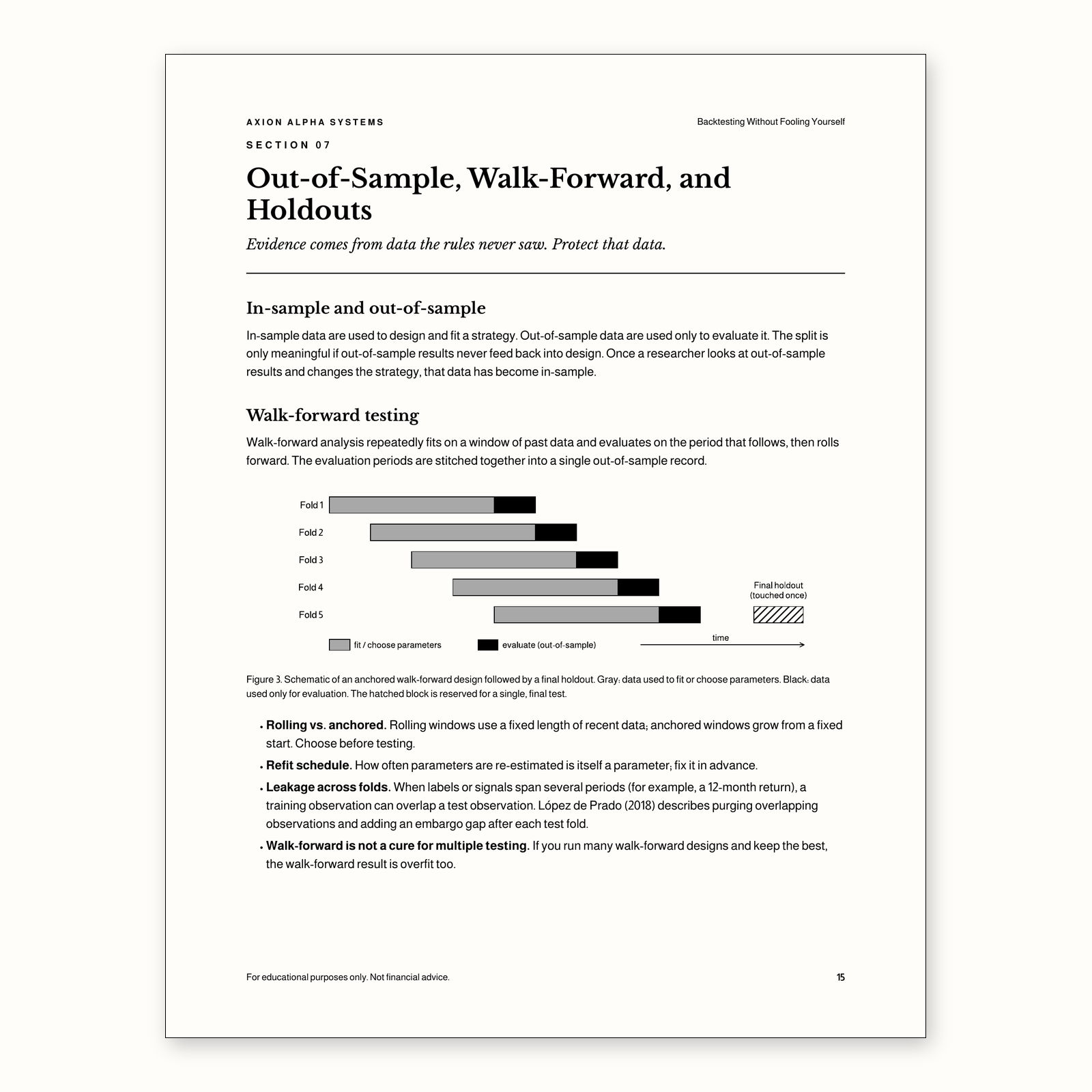 Image 4 of 4
A 30-page PDF on testing trading and allocation ideas honestly: the biases that make backtests look better than reality, the statistics that correct for them, and the tools to audit your own work. Includes a 27-point audit checklist, trial log, and pre-registration template.
Look-ahead bias, with a real-data demonstration of how a one-month timing error fabricates a Sharpe ratio above 2
Survivorship, delisting, backfill, and sample-selection bias
Overfitting and multiple testing, with a simulation of 1,000 zero-skill strategies
What the research says: Bailey et al. (2014), Harvey, Liu & Zhu (2016), McLean & Pontiff (2016)
The Deflated Sharpe Ratio explained step by step, with a worked example
Transaction costs, turnover, capacity, and realistic implementation
Walk-forward testing, purging and embargo, holdouts, and paper trading
Pre-registration, and a worked example: AXION Research Note 01, a pre-registered strategy that failed 3 of 6 tests
A 27-point backtest audit checklist, a trial log and audit worksheet, and a 15-section pre-registration template
Students, independent researchers, and analysts who build or evaluate backtests, and anyone who wants to judge a backtest used to market a product. Familiarity with the Sharpe ratio helps; AXION’s Quantitative Finance Foundations covers it.
PDF, 30 pages, US Letter. Instant download. Includes printable checklist, worksheets, and template.
It is not a trading system, signal service, or investment advice. No strategy in it is presented as validated or profitable. It contains no code library; the methods are explained so you can apply them in your own tools.
Do I need to know how to code?
No. The concepts, formulas, and checklists work with any tool, including a spreadsheet. Coding helps if you want to automate the tests.
Does it include a strategy that works?
No. It teaches how to test ideas, not which ideas to trade. Its worked example is a strategy that failed its pre-registered tests, reported as it happened.
What is pre-registration?
Writing down the rules and pass/fail tests before seeing results, then not changing them. The guide explains why it matters and includes a fill-in template.
Is this investment advice?
No. It is for educational purposes only.
For educational purposes only. Not financial advice. This guide does not recommend any security, fund, or strategy, and nothing in it is a promise of future returns. Historical figures describe the past only.